Chapter 32: Q4 and seasonality
This chapter covers how Amazon's busy season usually behaves, what it means for fees and inbound stock, and how to use ArbiSource as demand shifts through the year.
The yearly pattern
Demand on Amazon isn't flat:
- Late in the year (roughly October to December) is the busiest stretch for many categories. More customers buy, and more sellers send in stock.
- Early in the year often brings quieter sales and clearance pricing as leftover seasonal stock works through.
- Other peaks depend on the category: back to school, summer outdoor products, and so on. Always read the 12-month Keepa chart, not just the last 30 days (Chapter 9).
This handbook doesn't name individual sale events or promise dates. Use the pattern as a guide, then check the calendar and your charts for the year you're in.
Fees and storage rise in peak season
Amazon usually charges higher fulfillment fees and higher monthly storage in its peak season. The fulfillment peak has run from mid-October to mid-January, and storage rates are higher from October to December. The amounts change, so read the current tables in Seller Central each year before you buy heavily for Q4 (Chapter 5.1 and Chapter 5.2 show where to find them).
What that means in practice:
- A lead that only just met your minimums in summer may miss them once peak fees apply, so re-check Money at peak rates.
- Storage on slow stock costs more in Q4, so favor products you expect to sell through.
- Removals and aged-inventory surcharges still apply. Don't use Amazon as a warehouse for unsold seasonal goods.
Get stock in early
Fulfillment centers get busy. Ahead of peak season, Amazon publishes inbound cut-off dates and can set capacity limits for each account. Check Seller Central each year and plan shipments so your stock is checked in before the cut-offs that matter for your products.
A shipment that misses the window can still sell, but you may miss the best weeks. Smaller, earlier shipments beat one big late delivery.
Using ArbiSource through the seasons
- Price Drops often light up when retailers clear stock, which is useful early in the year and after seasonal peaks (Pro).
- Alerts on retailer and Amazon prices help you restock winners without watching pages all day (Pro).
- Re-run the Lead Check when fees or demand change. Last month's Buy can be this month's Pass.
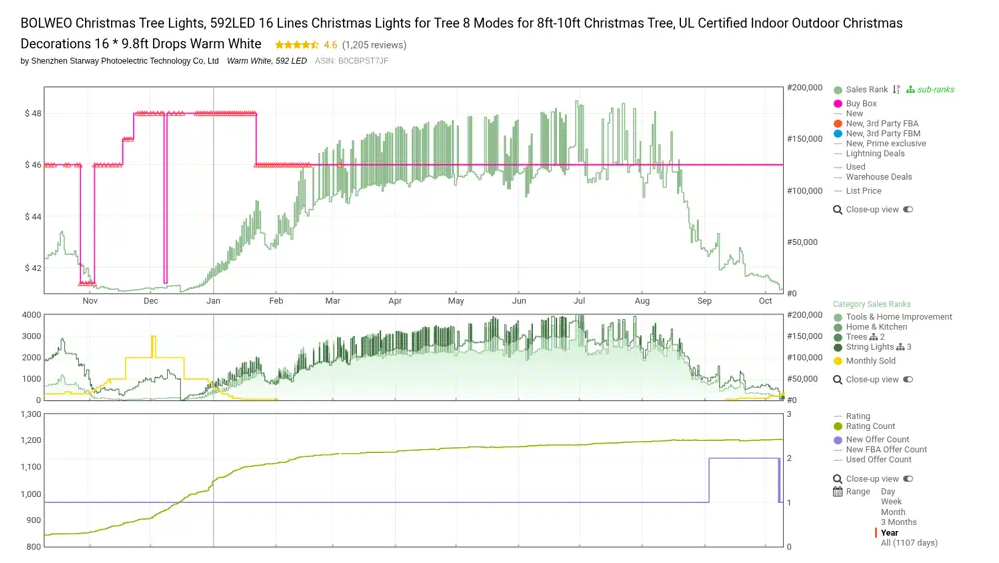
Keepa 12-month chart for Christmas tree lights on Amazon.com: the sales rank and monthly sales peak in the run-up to the holidays, then fall away in the new year.
Checklist
- I've checked this year's peak fulfillment fee and storage tables in Seller Central
- I've noted Amazon's inbound cut-off dates and any capacity limits for my account
- My seasonal buys still pass Money at peak fees
- I'm shipping early enough to be checked in before the busy weeks