Chapter 27: Profit, ROI and cash flow
The profit formula
For each unit:
Profit = sale price − Amazon's fees − VAT effects − your other costs − what you paid for the product
- Amazon's fees: referral, fulfilment, surcharges and storage (Chapter 25).
- VAT effects: VAT on Amazon's fees if you're not registered, or VAT on the sale (less what you reclaim) if you are (Chapter 26).
- Your other costs: prep supplies and shipping your stock to Amazon.
- What you paid: the price at the retailer, including any delivery charge, after discount codes.
ROI and margin
- ROI (return on investment) = profit ÷ what you paid. It shows how hard your money is working: £3 profit on a £6 item (50% ROI) uses your cash far better than £3 on a £30 item (10% ROI).
- Margin = profit ÷ sale price. It shows how much room you have if the price drops.
ArbiSource shows profit and ROI on every result.
Worked example: the boxed toy
Not VAT registered, selling at £24.99, bought for £12.00, with example prep and shipping costs.
| Amount | |
|---|---|
| Sale price | £24.99 |
| Amazon's fees, including one month's storage (Chapter 25) | −£7.10 |
| VAT on Amazon's fees (20%) | −£1.42 |
| Prep (label and polybag), example figure | −£0.20 |
| Shipping to Amazon, example figure | −£0.30 |
| Product cost | −£12.00 |
| Profit | £3.97 |
| ROI (£3.97 ÷ £12.00) | 33% |
Break-even price for this toy is about £20.10: £4.90 of room if prices fall. Find it by typing lower prices into a result's Sell box until profit reaches zero.
Use the average price, not today's price
Prices spike when stock runs low, then fall back. Each result's past-performance table shows the average Sell Price over 30, 90, 180 and 365 days with the Profit / ROI at each.
If a product is only profitable at today's price, treat it as a watch, not a buy.
Choosing your minimum profit and ROI
There's no single right number. Cover your per-unit costs and time; allow a bigger cushion on slow or volatile products; and a small budget grows faster with higher ROI. Start modest so you see a wide range while you learn (Chapter 3).
Cashback
Cashback sites can lower what you pay, but scan prices don't include it. To allow for the cashback you expect, add it as a discount percentage when you scan (Chapter 6), and remember cashback can be delayed, declined or capped, so check the site's terms.
Cash flow: how long your money is tied up
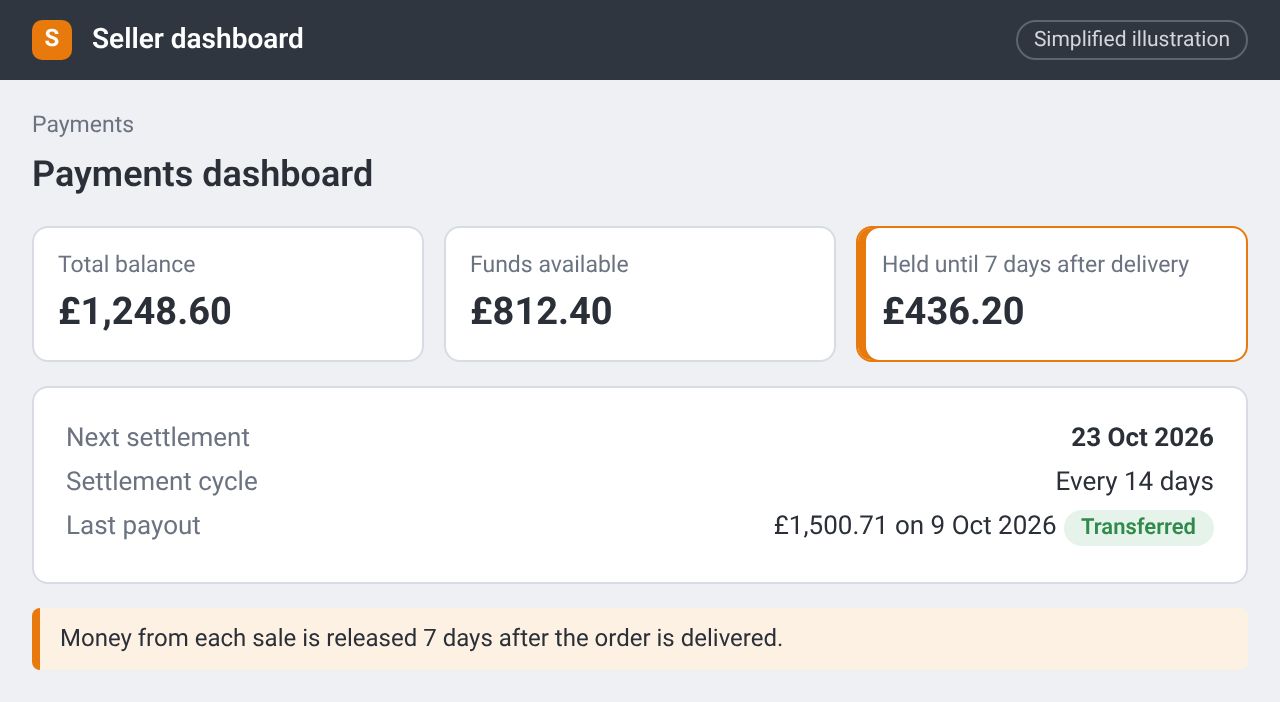
Your money is out through delivery, prep, shipping, check-in and the sale; Amazon then holds funds until 7 days after delivery and pays on a 14-day cycle (policy). A month or more between buying and getting paid is common. Keep some cash back for good deals.
Track what really happened
The profit in ArbiSource is an estimate made before you buy. A purchase log (date, retailer, ASIN, quantity, cost, target price) lets you compare it with what really happened, which is how you learn which leads to trust. A template is in Downloads.